BPC-157 and TB-500 are two of the most frequently co-studied peptides in tissue-repair research literature. Here is what the published mechanistic data actually describes.
BPC-157 and TB-500 are structurally unrelated peptides that are nonetheless frequently studied together because published literature describes overlapping downstream effects on angiogenesis, cell migration and extracellular matrix remodelling in in-vitro and animal tissue-repair models. Understanding what distinguishes their proposed mechanisms is essential for interpreting the research literature accurately.
BPC-157: sequence and origin
BPC-157 (Body Protection Compound-157) is a synthetic 15-amino-acid partial sequence derived from a fragment of human gastric juice protein. Its sequence is: Gly-Glu-Pro-Pro-Pro-Gly-Lys-Pro-Ala-Asp-Asp-Ala-Gly-Leu-Val. It is stable at room temperature relative to many other short peptides, and is notable in published research for retaining activity across a wide pH range in preclinical assay conditions, consistent with its native origin in the gastric environment.
Proposed mechanisms studied for BPC-157
- Modulation of nitric oxide (NO) system signalling in preclinical models.
- Upregulation of growth-factor receptor expression, including VEGFR2, in cell-culture and animal studies.
- Effects on angiogenesis in tendon, ligament and gastrointestinal tissue models.
- Interaction with the dopamine and serotonin systems described in select rodent studies.
TB-500: sequence and origin
TB-500 is a synthetic fragment corresponding to the actin-binding region of thymosin beta-4, a naturally occurring 43-amino-acid protein present in almost all human and animal cells. TB-500 specifically refers to the synthetic version of the biologically active fragment, sometimes reported in literature as the sequence spanning the actin-binding domain, rather than the full-length native protein.
Proposed mechanisms studied for TB-500
- Actin regulation — thymosin beta-4's native role is sequestering G-actin, influencing cell motility and cytoskeletal dynamics.
- Cell migration studies in wound-healing and endothelial-cell models.
- Angiogenesis-related signalling described in cardiac and dermal tissue research.
- Reduced inflammatory marker expression reported in select published animal studies.
Comparative mechanism reference
| Attribute | BPC-157 | TB-500 |
|---|---|---|
| Sequence length | 15 residues (synthetic fragment) | Fragment of 43-residue thymosin beta-4 |
| Structural origin | Gastric pentadecapeptide-derived | Actin-binding protein-derived |
| Primary studied pathway | NO system, VEGFR2 upregulation | Actin regulation, cell migration |
| Common co-study tissues | Tendon, ligament, GI tract | Cardiac, dermal, endothelial |
Why the two are frequently studied in combination
Because BPC-157's proposed mechanism centres on angiogenic signalling and growth-factor receptor modulation, while TB-500's centres on cytoskeletal and cell-migration dynamics, published research protocols sometimes design combination studies to examine whether these two distinct pathways produce additive effects in a given tissue-repair model. Any such combination research should be designed and interpreted with the two peptides' independent mechanisms kept clearly distinct.
Analytical documentation for both peptides
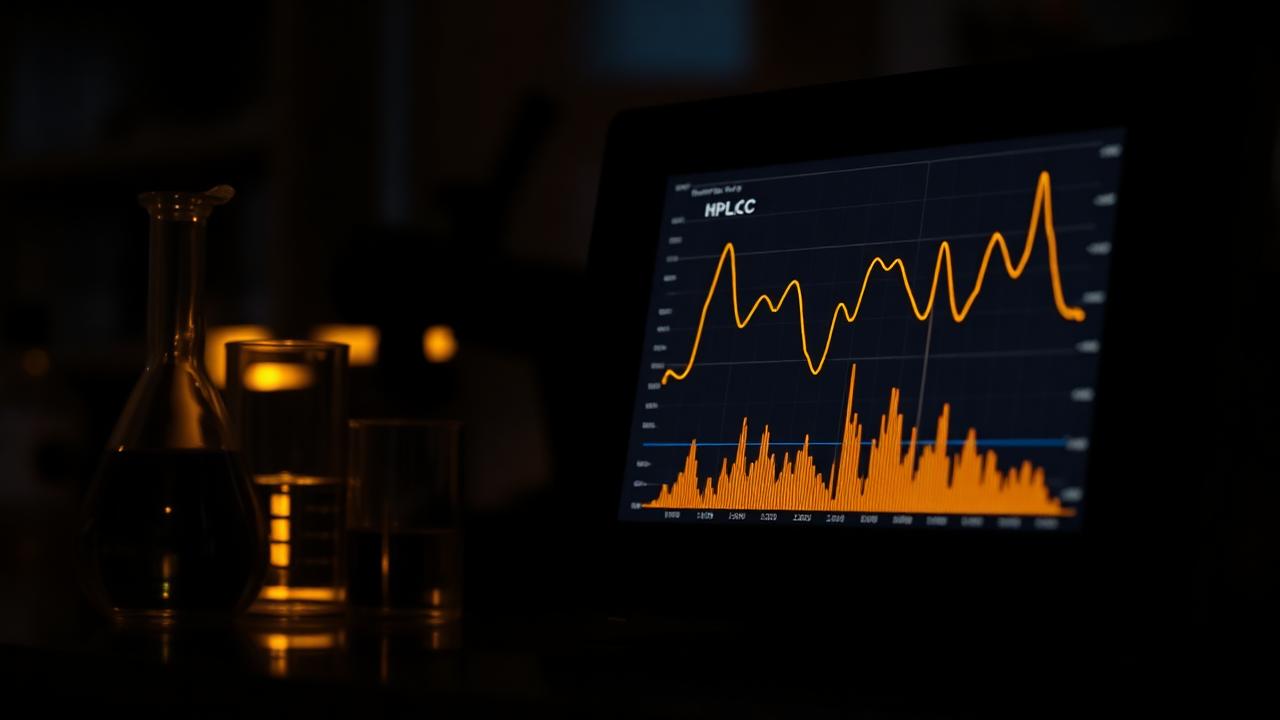
Both BPC-157 and TB-500 are short, unconjugated peptides that are well suited to standard C18 reverse-phase HPLC and LC-MS analytical workflows. A COA for either should report the same core fields as any other research peptide.
- Batch identifier and synthesis date traceable to the lot record
- HPLC purity ≥98% (typically ≥99% for peptides under 30 residues)
- LC-MS confirmed monoisotopic or average mass within ±0.5 Da of theoretical
- Counterion identity and content (acetate or trifluoroacetate) reported
- Bacterial endotoxin and residual solvents per the analytical method
Frequently asked questions
Is BPC-157 derived from a natural human protein?
BPC-157 is a synthetic peptide based on a partial sequence identified from human gastric juice protein; the research material itself is produced by solid-phase synthesis, not extracted biologically.
What is the relationship between TB-500 and thymosin beta-4?
TB-500 refers to the synthetic peptide corresponding to the actin-binding region of the naturally occurring 43-amino-acid protein thymosin beta-4.
Why are BPC-157 and TB-500 often studied together in the literature?
Their proposed mechanisms are complementary rather than overlapping — angiogenic and growth-factor signalling for BPC-157, cytoskeletal and cell-migration dynamics for TB-500 — which makes combined-protocol research a common design choice.
What analytical method is used to verify BPC-157 and TB-500 purity?
Both are well suited to standard C18 reverse-phase HPLC purity analysis paired with LC-MS mass confirmation, the same core methodology used across most short synthetic peptides.